REASON
Select the next experiment using physics, data, and objectives.
Materials-to-manufacturing platform built to deliver real, feasible solutions faster, reducing development and certification time while lowering failures associated with commercialization of advanced materials.
D2S connects physics-informed design, robotic synthesis, mechanical testing, qualification/certification, and scale-up validation in one closed-loop materials platform.

Materials can perform well in simulations but still fail during manufacturing, qualification, or scale-up. D2S addresses these risks from the beginning by integrating discovery, experimentation, qualification, and manufacturing validation into one platform.
Physics-informed AI identifies promising candidates based on targets, experimental evidence, and manufacturing constraints.
Robotic workcells synthesize, process, characterize, and mechanically test materials while capturing structured data.
Traceable testing evidence supports performance validation, certification, and customer adoption.
Early assessment of processing and production risks helps materials transition successfully from laboratory to manufacturing.
Select the next experiment using physics, data, and objectives.
Send executable instructions to autonomous workcells.
Capture processing, structure, and performance evidence.
Use every result to improve the next decision.
Work with us to discover, test, qualify, and scale advanced materials with lower technical and manufacturing risk. Every recommendation is evaluated not only for predicted performance, but also for processing, manufacturability, and practical pathways to scale.
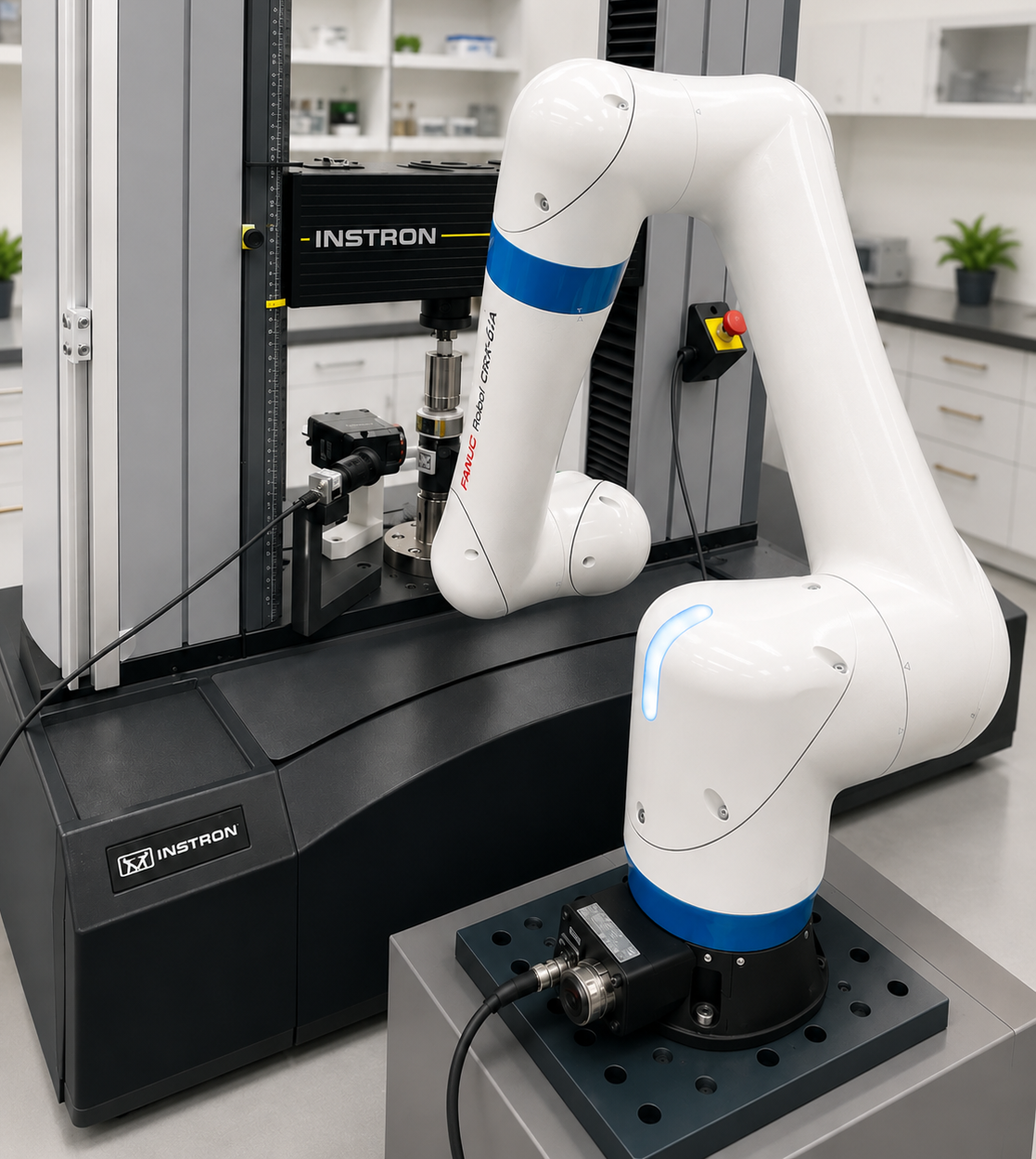
AI is most powerful when guided by domain expertise. Materials scientists define the physics, objectives, and manufacturing constraints. AI agents design experiments, robotic systems generate evidence, and every result strengthens the knowledge base for future decisions.